
Yoruba Traditional Dishes Explained
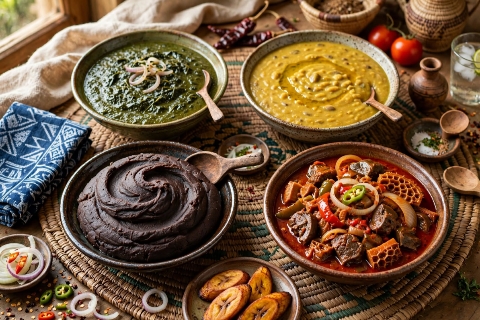
Yoruba cuisine is one of the rich food traditions found in southwestern Nigeria. It is known for hearty swallows, flavorful soups, spicy stews, beans-based dishes, yam meals, rice dishes and snacks prepared from ingredients that have long been common across the region.
Some dishes are everyday family meals, while others are closely associated with parties, ceremonies, restaurants and traditional gatherings. Popular examples include amala, ewedu, gbegiri, pounded yam, efo riro, Ofada rice, akara and moin moin.
What makes Yoruba food particularly interesting is the way different foods are combined. A plate of amala, for example, may come with ewedu, gbegiri and a spicy stew rather than being eaten alone. The result is a meal with different colours, textures, aromas and levels of heat.
Yoruba cuisine also varies from one community and state to another. Nigeria’s National Institute for Cultural Orientation lists different traditional foods across southwestern states such as Oyo, Osun, Ogun and Ondo, showing that there is no single menu that represents every Yoruba community.
What Is Yoruba Cuisine?
Yoruba cuisine refers broadly to the cooking traditions associated with Yoruba communities, particularly across southwestern Nigeria and other parts of Yorubaland.
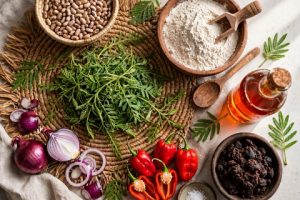
Traditional cooking makes extensive use of ingredients such as yam, cassava, plantain, beans, rice, vegetables, peppers, tomatoes, palm oil, meat, fish and fermented seasonings such as iru, also known as fermented locust beans.
Cooking methods include boiling, pounding, steaming, frying, roasting and simmering. These methods help create everything from smooth swallows to thick vegetable soups and spicy pepper sauces.
The food culture is also strongly connected with communal eating. Large pots of soup, rice or stew are common sights at family gatherings and celebrations.
Popular Yoruba Traditional Dishes
Amala
Amala is one of the foods most strongly associated with Yoruba cuisine. The most familiar version is made from dried yam flour, known as elubo, although cassava and unripe plantain flour can also be used.
Yam is peeled, sliced, dried and processed into flour. When the flour is mixed with hot water and stirred properly, it becomes a smooth, soft and stretchy swallow with a characteristic dark colour.
Amala is usually eaten with soup or stew rather than by itself. It is particularly popular with ewedu, gbegiri and pepper stew.
The National Library of Nigeria’s Yoruba Heritage Digital Archive also describes amala as a traditional Yoruba food commonly served with ewedu and gbegiri.
Ewedu Soup
Ewedu is a green soup prepared from jute leaves. The leaves are cooked and mashed until they develop a slightly slippery, viscous texture.
Traditionally, a cooking broom called ijabe may be used to mash the leaves and create the familiar consistency.
Ewedu is often served with amala and gbegiri. Its mild flavour and smooth texture work particularly well alongside the richer bean soup and spicy stew.
Google Arts & Culture’s documentation of Nigerian food traditions describes the traditional preparation of ewedu using washed, boiled leaves mashed with a cooking broom.
Gbegiri Soup
Gbegiri is a smooth bean soup commonly associated with Yoruba cooking.
It is usually made from peeled beans that are cooked until very soft, blended or mashed and then seasoned. Palm oil, pepper and other seasonings can be added according to the cook’s preferred style.
Gbegiri is especially well known as part of abula, the popular combination of amala, gbegiri, ewedu and pepper stew.
For a smooth gbegiri, the beans need to become extremely soft before blending or sieving. Undercooked beans can leave the soup grainy.
Abula
Abula is less a single soup than a combination of foods served together.
A classic plate contains:
- Amala
- Ewedu
- Gbegiri
- Pepper stew, often called obe ata
Each component contributes something different. The amala provides the swallow, ewedu adds a light green vegetable soup, gbegiri provides a creamy bean element, and the pepper stew contributes heat and deeper flavour.
This combination is especially common in Yoruba restaurants and local food spots.
Pounded Yam
Pounded yam, known as iyan, is another important Yoruba food.
Traditional preparation involves boiling yam until soft and pounding it with a mortar and pestle until it becomes smooth, elastic and free of lumps. Modern kitchens may use food processors or yam-pounding machines to reduce the physical work.
Pounded yam can be served with many soups, including egusi, efo riro, okra and ewedu.
It is also associated with celebrations and special meals. Google Arts & Culture notes its importance in traditional Nigerian food culture and its strong connection with Yoruba cuisine.
Efo Riro
Efo riro is a richly seasoned vegetable-based stew popular in Yoruba cooking.
The word efo generally refers to leafy vegetables, while riro refers to the cooking process. Depending on the household and available ingredients, the dish can contain vegetables, peppers, tomatoes, palm oil, meat, fish, crayfish or other proteins.
The exact recipe varies considerably. Some cooks prefer a thick, heavily seasoned version, while others use more vegetables and less oil.
It can be eaten with amala, pounded yam, eba, rice or other swallows.
Ofada Rice and Ofada Sauce
Ofada rice is a locally produced rice associated particularly with southwestern Nigeria. It is commonly served with a strongly flavoured pepper sauce often referred to as Ofada sauce or ayamase.
The traditional serving style is distinctive. The rice may be wrapped or presented in leaves, while the sauce is served alongside it.
The sauce commonly contains peppers, palm oil, fermented locust beans and assorted meat or other proteins. Google Arts & Culture describes Ofada rice and its accompanying stew as an important part of Nigerian food culture.
Akara
Akara is a fried bean cake made from blended beans mixed with pepper, onions and seasonings.
The bean mixture is usually whipped or mixed before frying. Small portions are dropped into hot oil and fried until the outside becomes golden and crisp.
Akara can be eaten for breakfast or as a snack. It can also be served with pap, bread or other accompaniments.
Moin Moin
Moin moin is a steamed bean pudding prepared from blended beans.
The basic mixture can contain peeled beans, peppers, onions, seasoning and oil. Depending on the cook, additional ingredients such as boiled eggs, fish or other fillings may be added.
Unlike akara, which is fried, moin moin is steamed. It therefore has a soft, moist texture rather than a crispy exterior.
Both akara and moin moin are included among foods associated with Yoruba cuisine and wider Nigerian food culture.
Ila Alasepo
Ila alasepo is a Yoruba-style okra dish. Okra gives the soup its characteristic slippery texture.
It can be prepared with meat, fish, crayfish and other seasonings. The dish may be eaten with eba, amala, pounded yam or another swallow.
For a good texture, avoid cooking grated okra for unnecessarily long periods.
Ikokore
Ikokore is a water-yam pottage associated with southwestern Nigeria, particularly Ogun State.
Unlike a typical swallow-and-soup combination, the water yam is cooked directly with other ingredients to create a thick, hearty dish.
Traditional versions may contain fish, peppers, palm oil and other seasonings.
Common Ingredients in Yoruba Cooking
Many Yoruba dishes rely on ingredients that are readily available in Nigerian markets.
Common ingredients include:
- Yam
- Yam flour or elubo
- Cassava
- Plantain
- Beans
- Rice
- Jute leaves
- Other leafy vegetables
- Okra
- Tomatoes
- Fresh peppers
- Dried pepper
- Palm oil
- Vegetable oil
- Crayfish
- Stockfish
- Smoked fish
- Beef, goat meat or poultry
- Iru (fermented locust beans)
- Onions
- Local seasonings
For readers outside Nigeria, some ingredients may require substitutions. Fresh ewedu, for example, can be difficult to find in some countries, so frozen or dried alternatives may be used when available. The exact result will depend on the ingredient.
How Yoruba Traditional Meals Are Usually Served
One interesting feature of Yoruba food is the combination of foods with contrasting textures.
A soft swallow may be paired with a smooth soup, a spicy stew and a protein such as beef or fish.
For example, a traditional-style meal could contain:
- Amala as the swallow.
- Ewedu for a light vegetable component.
- Gbegiri for a creamy bean soup.
- Pepper stew for heat and colour.
- Beef, fish or another protein.
Rice dishes are often served differently. Ofada rice, for instance, is commonly accompanied by a strongly flavoured pepper sauce.
Equipment for Preparing Yoruba Dishes
You do not need a professional kitchen to prepare most Yoruba meals.
Useful equipment includes:
- Heavy cooking pot
- Saucepan
- Blender
- Wooden spoon
- Cooking spoon or spatula
- Mortar and pestle, where appropriate
- Sieve
- Steaming pot
- Frying pan
- Sharp kitchen knife
- Chopping board
A traditional mortar and pestle can be useful for dishes such as pounded yam, although modern equipment can make the work easier.
Cooking Tips for Better Yoruba Food
Build flavour gradually
Do not throw every ingredient into a pot at once. For stews and soups, frying or cooking ingredients in stages can help develop deeper flavour.
Control the pepper
Traditional Nigerian food can be spicy, but the amount of pepper is adjustable. If cooking for children or guests who are sensitive to heat, reduce the quantity without removing the other seasonings.
Do not rush beans
Beans used for gbegiri, akara or moin moin need proper preparation. For gbegiri especially, the beans should become very soft before blending.
Watch the palm oil
Palm oil contributes colour and flavour to many Yoruba dishes. Use enough to achieve the desired result, but avoid heating oil unnecessarily for long periods.
Taste before serving
Salt, pepper and seasoning preferences vary from household to household. Taste the food before serving and adjust carefully.
Common Mistakes to Avoid
Making amala lumpy
Adding all the flour at once can make lumps. Gradually incorporate the flour into hot water while stirring continuously.
Making pounded yam too dry
The yam needs enough moisture to produce a smooth and stretchy texture. If using a modern machine, add water gradually rather than pouring in too much at once.
Overcooking ewedu
Ewedu does not need prolonged cooking. Overcooking can affect its colour and texture.
Burning stew
Pepper-based stews can burn easily when the liquid becomes low. Stir regularly and use moderate heat when necessary.
Adding too much salt early
Stock, smoked fish, seasoning and other ingredients may already contain salt. Season gradually and taste as you cook.
Regional and Family Variations
There is no single recipe book that completely defines Yoruba food.
Cooking styles can differ between states, towns and individual families. The National Institute for Cultural Orientation’s state-by-state food listings show examples from Oyo, Ogun, Osun and Ondo, including foods such as amala, ewedu, gbegiri, Ofada rice, ikokore, pupuru, marugbo soup and other regional dishes.
This variation is one reason Yoruba cuisine is so interesting. Two people can prepare the same named dish with different combinations of vegetables, protein, pepper and seasoning while still producing recognizably traditional food.
How to Store Yoruba Soups and Leftovers Safely
Cooked soups, stews, meat and other perishable foods should be cooled and refrigerated promptly rather than being left at room temperature for extended periods.
The U.S. Food and Drug Administration recommends refrigerating or freezing foods requiring refrigeration within two hours, with a shorter one-hour limit when temperatures are above 90°F (32°C).
For Nigerian kitchens, where temperatures can become quite high, it is particularly useful to portion leftovers into smaller containers so they cool more quickly.
When reheating, heat the portion thoroughly before eating and avoid repeatedly warming and cooling the entire pot.
Frequently Asked Questions
What is the most popular Yoruba traditional food?
There is no single food that represents every Yoruba household. Amala, ewedu, gbegiri, pounded yam, efo riro, akara and moin moin are among the widely recognized Yoruba foods.
What is amala made from?
The most common amala is made from dried yam flour called elubo. Other versions can be made from cassava or unripe plantain flour.
What is the difference between ewedu and gbegiri?
Ewedu is a green soup made from jute leaves, while gbegiri is a bean-based soup. They are often served together with amala and pepper stew.
Is Ofada rice the same as regular rice?
No. Ofada refers to a locally produced rice traditionally associated with southwestern Nigeria. It is commonly served with a strongly flavoured pepper sauce.
Can I make pounded yam without a mortar and pestle?
Yes. Modern food processors, yam-pounding machines and other kitchen equipment can reduce the physical work. The goal is to achieve a smooth, stretchy consistency.
What can I eat with amala?
Amala can be served with ewedu, gbegiri, pepper stew, efo riro, okra soup and several other Nigerian soups and stews.
Are Yoruba foods always spicy?
No. Many Yoruba dishes use pepper, but the level of heat can be adjusted according to personal preference.
Can Yoruba soups be frozen?
Many cooked Yoruba soups and stews can be frozen when stored properly in suitable containers. Divide them into meal-sized portions, freeze promptly and thaw safely before reheating.
Conclusion
Yoruba traditional dishes offer much more than individual recipes. They show how ingredients such as yam, beans, vegetables, peppers, rice, palm oil and fermented seasonings can be combined into meals with very different textures and flavours.
From the familiar combination of amala, ewedu and gbegiri to pounded yam, efo riro, Ofada rice, akara and moin moin, there is plenty to explore.
If you are new to Yoruba cooking, start with one familiar dish and learn the technique before trying more complicated meals. A good final tip is to taste as you cook and adjust pepper, salt and seasoning gradually. That simple habit can make a big difference in the final result.


Leave a Comment