
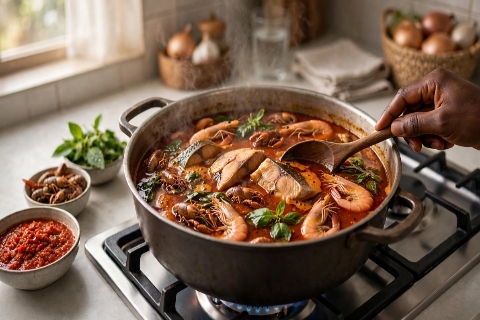
Niger Delta Seafood Dishes
The Niger Delta is one of Nigeria’s richest food regions when it comes to fish and seafood. With its rivers, creeks, mangrove forests and coastal communities, fresh fish, prawns, crayfish, periwinkles and other water-based ingredients have long been part of local cooking.
Niger Delta seafood dishes are especially loved for their deep, peppery flavours and generous use of fresh seafood. Depending on the community and recipe, a pot may contain catfish, croaker, prawns, crab, periwinkles, crayfish or a mixture of several ingredients.
This guide brings together a practical Niger Delta-style seafood soup that you can prepare at home. It is moderately easy, takes roughly an hour from preparation to serving, and works particularly well with starches such as eba, pounded yam, fufu or boiled yam.
What Makes Niger Delta Seafood Dishes Special?
Niger Delta cooking varies from one community to another, so there is no single recipe that represents every dish from the region. Recipes from Rivers, Bayelsa, Delta, Akwa Ibom and Cross River communities can differ in ingredients, thickness, pepper levels and cooking methods.
What many seafood dishes have in common is the use of fresh ingredients and strong natural flavours.
A typical pot might combine:
- Fresh fish
- Crayfish
- Prawns or shrimp
- Periwinkles
- Pepper
- Onions
- Local leafy vegetables
- Palm oil
- Seasonings and aromatic ingredients
Some cooks prefer a light, brothy soup, while others make a thicker seafood stew or soup designed to accompany swallow.
Easy Niger Delta Seafood Soup Recipe
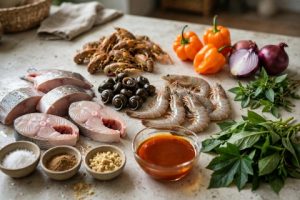
This recipe uses a combination of fresh fish, prawns and crayfish. Periwinkles can also be added if they are available.
Prep Time, Cook Time and Servings
- Prep time: 20 minutes
- Cook time: 35–40 minutes
- Total time: About 1 hour
- Servings: 5–6 people
- Difficulty: Moderate
Ingredients
For the Seafood
- 1 kg fresh fish, such as catfish or croaker
- 300 g fresh prawns or shrimp
- 150 g cleaned periwinkles, optional
- 3 tablespoons ground crayfish
- 1 medium onion
- 2–3 Scotch bonnet peppers (atarodo), adjusted to taste
- 1 small piece of fresh ginger, optional
- 2 cloves garlic, optional
For the Soup
- 3 tablespoons palm oil
- 1 litre water or light fish stock
- 2 seasoning cubes, optional
- 1 teaspoon ground black pepper
- Salt to taste
- 1–2 tablespoons ground ogiri, optional
- 1 small bunch scent leaves or another suitable Nigerian herb
- 1 handful ugu (fluted pumpkin leaves), optional
- 1 tablespoon ground uziza, optional
- 1 tablespoon ground dried pepper, if more heat is desired
For Cleaning the Fish
- 1–2 tablespoons salt
- Water
- A little lemon juice or vinegar, optional
If you live outside Nigeria, fresh Nigerian ingredients may not always be available. Frozen prawns, shrimp and fish can work well. Dried crayfish can also be purchased from African grocery stores.
Equipment Needed
You do not need specialised equipment for this recipe. A few basic kitchen items are enough:
- Large cooking pot
- Sharp kitchen knife
- Chopping board
- Blender or food processor
- Wooden spoon
- Bowl for washing seafood
- Measuring spoons
How to Prepare the Seafood
Fresh seafood needs careful cleaning before it goes into the pot.
Clean the Fish
Wash the fish thoroughly and remove any unwanted parts. If you are using catfish, you can clean it with salt and a little lemon juice or vinegar before rinsing.
Avoid leaving the fish sitting in acidic ingredients for a long time because this can affect its texture.
Prepare the Prawns
Remove the shells if preferred and clean the prawns properly. If you like the flavour from the shells, you can leave some shell-on while cooking.
Prepare the Periwinkles
If using fresh periwinkles, clean them thoroughly to remove dirt and sand. Frozen or already-cleaned periwinkles are more convenient and can save preparation time.
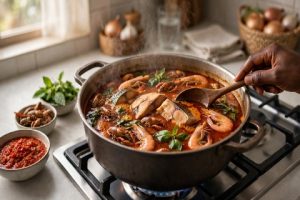
How to Cook Niger Delta Seafood Soup
1. Blend the Pepper and Onion
Add the Scotch bonnet peppers, half of the onion, ginger and garlic to a blender.
Add a small amount of water and blend until you have a smooth or slightly coarse mixture.
You do not need to make the mixture completely smooth if you prefer some texture.
2. Season the Fish
Place the cleaned fish in a bowl and season lightly with salt and a little black pepper.
Set it aside while you prepare the soup base.
3. Prepare the Soup Base
Place a clean pot over medium heat and add the palm oil.
Allow it to warm gently. Do not boil or burn the palm oil.
Add the remaining chopped onion and cook for about 2 minutes.
Pour in the blended pepper mixture and stir.
4. Add the Crayfish
Add the ground crayfish and, if you are using it, ogiri.
Stir everything together and allow the mixture to cook for several minutes. The smell should become noticeably richer as the crayfish and pepper cook into the base.
5. Add Water or Fish Stock
Pour in approximately 1 litre of water or light fish stock.
Add a little salt and the optional seasoning cubes.
Bring the soup to a gentle boil.
If the liquid looks too thick, you can add a little more water later. It is easier to thin a soup than to correct one that has become excessively watery.
6. Add the Fish
Carefully place the fish pieces into the simmering soup.
Try not to stir aggressively because fish can break apart easily.
Cover the pot partially and allow the fish to cook gently for approximately 10–15 minutes, depending on the size and type of fish.
7. Add the Prawns and Periwinkles
Add the prawns and cleaned periwinkles.
Prawns generally cook quickly, so they should not be added too early.
Cook until the prawns become opaque and cooked through.
8. Add the Vegetables
Wash and slice the scent leaves or ugu.
Add them toward the end of cooking so they retain some colour, aroma and texture.
If using uziza, add a small amount because its peppery flavour can become strong.
9. Taste and Adjust
Taste the soup carefully.
Adjust:
- Salt
- Pepper
- Water
- Crayfish
- Seasoning
Allow everything to simmer gently for another few minutes.
Turn off the heat once the seafood is properly cooked and the flavours have come together.
Cooking Tips for Better Seafood Soup
Do Not Overcook the Seafood
Fish and prawns can become tough or dry when cooked for too long. Add seafood according to cooking time rather than putting everything into the pot at once.
Handle Fish Gently
Avoid vigorous stirring after adding the fish. Instead, gently shake the pot from side to side when you need to distribute the soup.
Use Fresh Seafood When Possible
Fresh seafood gives the soup a cleaner and more noticeable flavour. Frozen seafood is still a useful alternative, especially when fresh options are unavailable.
Control the Pepper
Nigerian pepper varieties can differ significantly in heat. Start with less pepper and increase it if necessary.
Do Not Overdo Ogiri
Ogiri has a strong fermented aroma. A small amount can add depth, but too much can dominate the entire soup.
Common Mistakes to Avoid
Adding Everything at Once
Different seafood ingredients cook at different speeds. Adding prawns at the same time as large fish pieces can result in overcooked prawns.
Making the Soup Too Watery
Start with a moderate amount of liquid. You can always add more water during cooking.
Burning the Palm Oil
Palm oil should be warmed gently rather than overheated until smoking.
Breaking the Fish
Frequent stirring can turn attractive fish pieces into fragments. Use gentle movements once the fish is in the pot.
Using Too Much Seasoning
Crayfish, seafood and fermented ingredients already contribute plenty of flavour. Add seasoning gradually and taste as you cook.
Variations You Can Try
Niger Delta seafood cooking is flexible, so you can adjust the recipe according to what is available.
Mixed Seafood Soup
Combine fish, prawns, crab, periwinkles and crayfish for a richer seafood pot.
Fish-Only Version
Use different types of fish if shellfish is unavailable. Catfish, croaker and other firm-fleshed fish can work well.
Leafy Seafood Soup
Increase the amount of ugu or another suitable leafy vegetable for a greener version.
Less Spicy Version
Reduce the Scotch bonnet peppers and remove some seeds before blending.
No Palm Oil Version
For a lighter-looking broth, omit the palm oil and increase the aromatic ingredients. The result will have a different flavour from the palm-oil version but can still be delicious.
What to Serve With Niger Delta Seafood Soup
The soup can be enjoyed with several Nigerian staples.
Good options include:
- Eba (garri)
- Pounded yam
- Fufu
- Semo
- Wheat swallow
- Boiled yam
- Boiled plantain
- Rice, depending on the consistency of the soup
For a traditional-style meal, serve the hot seafood soup with your preferred swallow.
Storage and Reheating
Allow leftover soup to cool reasonably quickly before transferring it into a clean, covered container.
Refrigerate and use within a few days, or freeze portions if you need longer storage.
When reheating, heat the soup thoroughly until steaming hot. Avoid repeatedly reheating the entire pot; instead, warm only the portion you intend to eat.
Because seafood is highly perishable, do not leave cooked seafood sitting at room temperature for extended periods.
Nutritional Notes
Fish and shellfish can provide protein and several important nutrients, while vegetables contribute fibre and other nutrients.
The exact nutritional content of this recipe depends on the seafood used, quantity of palm oil, portion size and other ingredients. For that reason, this recipe does not provide a fixed calorie or nutrient figure.
Frequently Asked Questions
What seafood is commonly used in Niger Delta cooking?
Fish, crayfish, prawns, shrimp, crabs and periwinkles are among the seafood ingredients commonly used in dishes from the region. The exact combination varies between communities and individual recipes.
Can I use frozen seafood?
Yes. Frozen fish, prawns and other seafood can be used when fresh seafood is unavailable. Thaw seafood safely before cooking and drain excess water where necessary.
Can I make this soup without periwinkles?
Yes. Periwinkles are optional in this recipe. You can leave them out or replace them with additional prawns, crab or fish.
Which fish is best for Nigerian seafood soup?
Catfish and croaker are practical choices, but other firm-fleshed fish can also work. Choose fish that will hold together reasonably well during simmering.
Can I reduce the amount of palm oil?
Yes. You can reduce it if you prefer a less oily soup. The colour and flavour will change slightly.
Why did my fish break apart?
The most common reason is excessive stirring. Fish becomes delicate during cooking, so gently move the pot instead of stirring aggressively with a spoon.
Can I freeze Niger Delta seafood soup?
Yes, seafood soup can be frozen in suitable airtight containers. Divide it into meal-sized portions, cool it appropriately before freezing, and reheat thoroughly when needed.
What can I use instead of ogiri?
If ogiri is unavailable, you can leave it out rather than replacing it with a large quantity of another strong fermented ingredient. Crayfish and fresh seafood will still provide plenty of flavour.
Conclusion
Niger Delta seafood dishes are a wonderful way to enjoy Nigeria’s coastal food traditions at home. A combination of fresh fish, prawns, crayfish, pepper, herbs and carefully balanced seasoning can produce a deeply savoury soup without requiring complicated equipment.
The key is to cook different seafood ingredients according to how quickly they cook and handle the fish gently. Start with moderate seasoning, taste as you go, and adjust the pepper and liquid to suit your household.
Serve the finished soup with eba, pounded yam, fufu or another favourite accompaniment, and enjoy it while hot.


Leave a Comment