
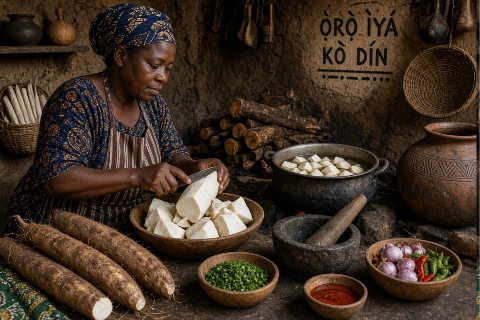
Traditional New Yam Festival Foods in Nigeria
When fresh yams begin appearing in Nigerian markets, many families know that something special is approaching. The New Yam Festival is not simply about eating a newly harvested tuber. In many communities, it is a time for family gatherings, cultural celebrations, thanksgiving, music, dancing, and sharing food.
Among the best-known traditions is the Igbo Iri Ji or New Yam Festival, where yam has a central cultural place. New yam celebrations also take different forms among other Nigerian communities. For example, UNESCO’s documentation of the Sango Festival in Oyo describes devotees sharing roasted new yam with palm oil during the celebration.
The exact menu varies from one community and household to another, so there is no single menu that represents every New Yam Festival in Nigeria. However, several yam dishes and Nigerian soups commonly fit naturally into a festive new-yam meal.
This guide looks at some of the traditional New Yam Festival foods you can prepare at home, including roasted yam, boiled yam, pounded yam, yam porridge, and soups served alongside yam.
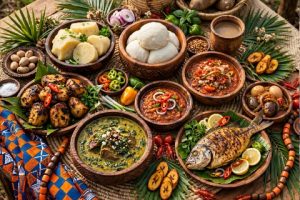
What Is the New Yam Festival?
The New Yam Festival is a harvest celebration associated with the arrival of newly harvested yam. It is particularly prominent in southeastern Nigeria, where it is widely known as Iri Ji among Igbo communities.
The celebration is connected to agriculture, community life, and gratitude for the harvest. UNESCO’s inventory of Nigerian cultural resources also identifies the New Yam Festival as part of Nigeria’s cultural heritage.
The festival is not identical everywhere. Dates, ceremonies, names, traditional practices, and foods can differ between communities.
Food, however, remains one of the most visible parts of the celebration. Fresh yam can be boiled, roasted, pounded, or incorporated into other dishes and served to family members and visitors.
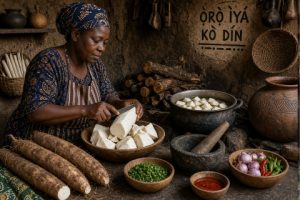
Traditional New Yam Festival Foods to Try
1. Roasted New Yam
Roasted yam is one of the simplest ways to enjoy freshly harvested yam.
Thick pieces of yam are roasted over charcoal, firewood, or another suitable heat source until the outside develops a lightly browned, smoky surface while the inside becomes soft.
It can be eaten on its own or served with palm oil, pepper sauce, garden-egg sauce, or another local accompaniment.
The combination of smoky yam, palm oil, and pepper is especially associated with some traditional celebrations. UNESCO’s documentation of the Sango Festival in Oyo specifically records the sharing and eating of roasted new yam and palm oil.
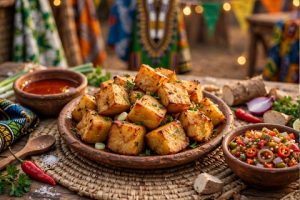
2. Boiled New Yam
Boiled yam is another straightforward festival dish.
Fresh yam is peeled, washed, cut into manageable pieces, and boiled until tender. The finished yam has a soft, satisfying texture and a mild flavour that works well with strongly seasoned sauces.
For a festive table, serve it with:
- Palm oil and pepper sauce
- Tomato and pepper sauce
- Garden-egg sauce
- Fish stew
- Egg sauce
- Vegetable sauce
Simple Boiled New Yam Method
- Peel the yam with a sharp knife or vegetable peeler.
- Wash the pieces thoroughly under clean running water.
- Cut the yam into medium-sized chunks.
- Place the pieces in a pot and add enough water to cover them.
- Add a little salt if desired.
- Boil until a fork or knife passes easily through the thickest piece.
- Drain the water and serve while hot.
Avoid cooking the yam far beyond the point of tenderness, because very soft pieces can become watery or break apart when served.
Pounded Yam and Soup
Pounded yam is one of the most popular yam-based meals in Nigeria. It is made by pounding cooked yam until it becomes smooth, stretchy, and soft.
Traditionally, cooked yam is pounded using a mortar and pestle. Modern households may use a food processor or yam-pounding machine, although the texture can differ.
For a festival meal, pounded yam can be served with soups such as:
- Egusi soup
- Ogbono soup
- Okra soup
- Vegetable soup
- Bitterleaf soup
- Oha soup
- Groundnut soup
The choice of soup depends heavily on the family and community.
Nigeria’s National Bureau of Statistics lists pounded yam with soup among recognized meal categories in its household survey data, reflecting how established the combination is within Nigerian food culture.
Basic Pounded Yam Method
- Peel and wash fresh yam.
- Cut it into fairly equal pieces.
- Put the yam into a pot and add water.
- Boil until completely tender.
- Drain most of the water.
- Pound the hot yam until smooth and free from lumps.
- Add small amounts of hot water if necessary to achieve the desired softness.
- Continue pounding until the texture becomes smooth and stretchy.
- Serve immediately with your preferred Nigerian soup.
Tip: Pounded yam is easiest to work with while the cooked yam is still hot.
Yam Porridge
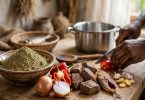
Yam porridge, also called yam pottage, is a practical way to turn fresh yam into a rich one-pot meal.
The yam is cooked with ingredients such as palm oil, pepper, onions, seasoning, and sometimes fish, meat, crayfish, or leafy vegetables.
A typical festive version can be made richer than an everyday family meal by adding smoked fish or carefully prepared meat.
Ingredients for Yam Porridge
For about 4–6 servings:
- 1 kg fresh yam
- ½ cup palm oil
- 1 large onion, chopped
- 3–5 fresh peppers, adjusted to taste
- 2 medium tomatoes, optional
- 1–2 tablespoons ground crayfish, optional
- 300–400 g smoked fish, cooked fish, or meat
- 2–3 cups water or stock
- Salt to taste
- Seasoning, optional
- A handful of ugu or another suitable leafy vegetable, optional
How to Cook Yam Porridge
- Peel the yam, wash it, and cut it into medium-sized cubes.
- Blend or finely chop the tomatoes, pepper, and part of the onion if using them.
- Heat the palm oil gently in a suitable pot.
- Add the remaining onion and cook briefly until softened.
- Add the pepper and tomato mixture and cook until the raw smell reduces.
- Add the crayfish if using it.
- Add the yam pieces and stir carefully so they are coated with the sauce.
- Pour in enough water or stock to cook the yam without making the porridge excessively watery.
- Add the fish or meat.
- Cover and cook over medium heat until the yam becomes tender.
- Taste and adjust the salt and seasoning.
- Gently mash some of the softer yam pieces against the side of the pot to thicken the sauce.
- Add chopped leafy vegetables near the end if desired.
- Cook for a few more minutes and serve hot.
Do not stir aggressively once the yam becomes soft. Gentle stirring helps create a thick porridge while keeping some yam pieces intact.
Yam with Palm Oil and Pepper Sauce
For households that want something simple, boiled new yam with palm oil and pepper sauce is an excellent option.
You can prepare the sauce by combining fresh pepper, onion, and a little salt, then serving it with good-quality palm oil. Some families prefer to lightly cook the pepper and onion before adding the palm oil.
This meal allows the flavour of the fresh yam to remain the star.
New Yam with Garden-Egg Sauce
Garden-egg sauce is another traditional-style accompaniment that works well with boiled yam.
Garden eggs are cooked or roasted and combined with pepper, onions, tomatoes or other ingredients depending on the household recipe.
The slightly bitter, earthy taste of garden egg contrasts nicely with the mild sweetness of freshly cooked yam.
For an especially attractive festival table, serve the yam in a large bowl with the sauce separately so guests can help themselves.
Soups Commonly Served With Yam
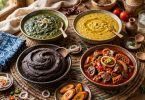
A New Yam Festival meal does not have to consist of yam alone. Soups can turn boiled yam or pounded yam into a substantial communal meal.
Egusi Soup
Egusi soup is made primarily with ground melon seeds and can include meat, fish, leafy vegetables, palm oil, pepper, and other seasonings.
It pairs naturally with pounded yam.
Oha Soup
Oha soup, made with oha leaves, is especially associated with southeastern Nigerian cooking. It can be prepared with meat, stockfish, cocoyam or another thickener depending on the recipe and household tradition.
Bitterleaf Soup
Bitterleaf soup is another southeastern Nigerian favourite. Proper washing of the leaves is important when using fresh bitterleaf because excessive bitterness can overpower the finished soup.
Ogbono Soup
Ogbono is made from ground ogbono seeds and is known for its characteristic thick, stretchy texture.
It is particularly good with pounded yam because the soup clings easily to each portion.
A Simple New Yam Festival Meal Plan
If you are hosting a small celebration, you do not need to prepare every yam dish.
A practical menu could include:
Main dishes
- Pounded yam
- Boiled new yam
- Yam porridge
Soups and sauces
- Egusi soup
- Oha or bitterleaf soup
- Pepper sauce
- Garden-egg sauce
Protein
- Grilled or fried fish
- Chicken
- Goat meat
- Smoked fish
Drinks
- Zobo
- Kunu
- Water
- Other family-preferred drinks
The Nigerian National Bureau of Statistics’ household data also recognizes foods such as roasted yam among roasted or boiled food categories, illustrating that yam preparation extends well beyond pounded yam.
Ingredients That May Need Substitutions Abroad
Nigerians living outside the country may not always find every ingredient fresh.
Here are some practical substitutions:
- Fresh new yam: frozen yam or good-quality African yam can work, although the texture may differ.
- Ugu: use another suitable leafy green where ugu is unavailable.
- Oha leaves: frozen oha is an option where available.
- Fresh pepper: frozen peppers can work for sauces and soups.
- Fresh palm oil: use food-grade palm oil from a reputable African grocery store.
- Garden eggs: aubergine or suitable small eggplant varieties can be used for a different version of garden-egg sauce.
The goal is to preserve the character of the meal rather than make an unavailable ingredient a reason not to cook.
Cooking Tips for New Yam Festival Foods
Choose firm, fresh yam
Look for yam that feels firm and has no obvious soft, rotten, or badly damaged areas.
Do not overcook boiled yam
Cook until tender but still firm enough to hold its shape.
Season soups gradually
Festival cooking often involves large pots. Add salt little by little and taste as you go.
Keep the yam warm
Boiled yam and pounded yam are generally best served warm. If pounded yam sits uncovered for too long, its surface can become dry.
Prepare food in manageable batches
For a large gathering, cooking one enormous pot of everything can make temperature and texture difficult to control. Preparing some dishes in batches can give you better results.
Common Mistakes to Avoid
- Cutting yam into wildly different sizes, which causes some pieces to become soft before others are cooked.
- Adding too much water to yam porridge.
- Using excessive pepper without considering your guests.
- Overcooking yam until it completely breaks apart.
- Leaving cooked yam uncovered for long periods.
- Adding too much salt early in a soup when the stock or smoked fish may already be salty.
How to Store Leftover Yam Dishes
Allow cooked food to cool appropriately before transferring it to clean, covered containers.
Refrigerate leftovers promptly rather than leaving them at room temperature for extended periods. When reheating, heat the food thoroughly and add a small amount of water to thick dishes such as yam porridge if necessary.
For large gatherings, it is better to divide leftovers into smaller containers so they cool and reheat more evenly.
Frequently Asked Questions
What foods are eaten during the New Yam Festival?
Common choices can include roasted new yam, boiled yam, pounded yam, yam porridge, and yam served with soups or sauces. The exact foods vary by community and family tradition.
What is the traditional food for Iri Ji?
Yam is the central food associated with Iri Ji, but there is no single recipe used by every Igbo community. Families may prepare yam in different ways and serve it with local soups, sauces, meat, or fish.
Can I use ordinary yam instead of new yam?
Yes. Ordinary fresh yam can be used for most recipes, although newly harvested yam may have a particular texture and cultural significance during the festival season.
What soup goes well with pounded yam?
Egusi, ogbono, bitterleaf, oha, okra, and vegetable soups are all commonly paired with pounded yam. Choose according to your family’s preference and the style of meal you want to prepare.
Can I make New Yam Festival food outside Nigeria?
Yes. African grocery stores in many countries stock yam, palm oil, egusi, ogbono, dried crayfish, and other Nigerian ingredients. Frozen versions of some vegetables can also be useful.
Is roasted yam eaten during Nigerian festivals?
Yes. Roasted yam is used in Nigerian food culture, and UNESCO specifically documents roasted new yam and palm oil as part of the Sango Festival in Oyo.
How do I stop yam porridge from becoming watery?
Use only enough water or stock to cook the yam. As the yam softens, gently mash some pieces into the sauce to naturally thicken the porridge.
Can I prepare the yam dishes a day before the festival?
Some soups and sauces can be prepared ahead, but dishes such as pounded yam and boiled yam are generally best prepared close to serving time. This helps preserve their texture and freshness.
Conclusion
Traditional New Yam Festival foods are more than a collection of yam recipes. They bring together harvest, family, hospitality, and regional Nigerian food traditions around an ingredient that has a special place on the Nigerian table.
From smoky roasted yam and simple boiled yam to pounded yam with soup and richly seasoned yam porridge, there are plenty of ways to build a memorable festival meal. The exact menu can be adapted to your family’s tradition, available ingredients, and the number of guests.
For the best results, choose good-quality yam, season gradually, and prepare delicate dishes as close to serving time as practical. If you cook any of these dishes for your next New Yam celebration, enjoy the food with family and friends and make the meal your own.


Leave a Comment