
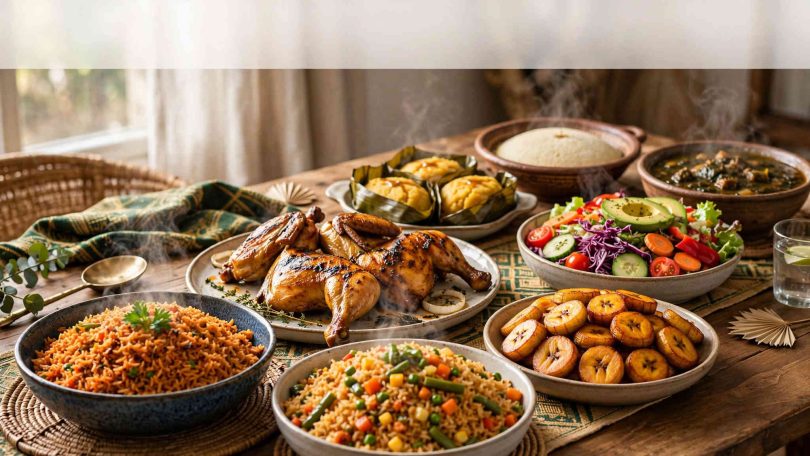
Christmas & Sallah Special Dishes in Nigeria
Nigeria’s biggest celebrations often come with equally memorable meals. Christmas tables commonly feature jollof rice, fried rice, chicken, plantain, salads, moi moi and assorted snacks, while Sallah celebrations, particularly in Northern Nigeria, may include rice dishes, tuwo shinkafa, miyan kuka, miyan taushe and plenty of meat.
There is no single menu that every Nigerian family follows. Food traditions differ by region, religion, family and personal preference. The National Institute for Cultural Orientation also highlights the wide variety of dishes found across Nigeria’s different regions.
This guide brings together practical Christmas and Sallah special dishes that work well when cooking for family, visitors and larger festive gatherings. Some recipes are complete dishes, while others are simple components that can be combined into a full celebration menu.
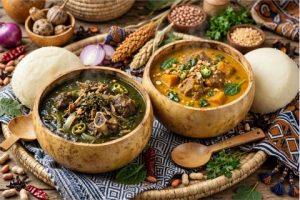
Christmas & Sallah Special Dishes in Nigeria
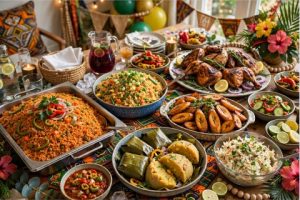
Christmas and Sallah Food at a Glance
Here are some of the dishes covered in this guide:
- Nigerian party jollof rice
- Nigerian fried rice
- Festive chicken and peppered meat
- Moi moi
- Tuwo shinkafa with miyan kuka
- Miyan taushe
- Dodo (fried plantain)
The exact menu can be adjusted according to your budget and the number of guests.
Nigerian Party Jollof Rice
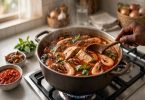
Jollof rice is one of the most familiar dishes on Nigerian celebration tables. It is especially associated with parties and Christmas gatherings, where it is commonly served with chicken, fried plantain and salad. Nigerian festive menus frequently pair jollof with fried rice and assorted proteins.
Ingredients
For about 8 servings:
- 4 cups long-grain parboiled rice
- 5 medium tomatoes
- 3 red bell peppers (tatashe)
- 1–2 Scotch bonnet peppers
- 2 medium onions
- ⅓ cup vegetable oil
- 3 tablespoons tomato paste
- 2 cups chicken stock
- 1 teaspoon thyme
- 1 teaspoon curry powder
- 2 bay leaves
- 1 teaspoon ginger
- 1 teaspoon garlic
- Salt to taste
- Chicken seasoning, if desired
Method
- Wash the tomatoes, peppers and one onion, then blend them until reasonably smooth.
- Heat the oil in a large heavy-bottomed pot and sauté the remaining chopped onion.
- Add the tomato paste and fry for a few minutes.
- Pour in the blended pepper mixture and cook until the excess moisture reduces and the mixture becomes noticeably thicker.
- Add thyme, curry powder, ginger, garlic, bay leaves, seasoning and salt.
- Pour in the chicken stock and bring the mixture to a gentle boil.
- Add the washed rice and stir carefully so the rice is coated with the sauce.
- Cover tightly and cook over low heat until the rice is tender.
- If necessary, add a small amount of stock or water rather than flooding the pot.
- Allow the rice to rest for a few minutes before fluffing gently.
For a smoky party-style flavour, some cooks prepare jollof in a large pot over a controlled outdoor fire. The Guardian has also documented the association between festive Nigerian jollof and celebratory gatherings.
Nigerian Fried Rice
Nigerian Fried Rice
Fried rice gives a Christmas or celebration table a colourful alternative to jollof. It is usually prepared with vegetables such as carrots, peas and green beans and can be served with fried or grilled chicken.
Ingredients
For about 6–8 servings:
- 4 cups cooked long-grain rice
- 2 cups diced carrots
- 1 cup green peas
- 1 cup diced green beans
- 1 cup sweet corn
- 1 medium onion
- 2 tablespoons vegetable oil
- 1 teaspoon curry powder
- ½ teaspoon thyme
- 1–2 cups cooked diced chicken
- Salt to taste
- Chicken stock, as needed
Method
- Cook the rice until just tender and allow it to cool.
- Heat the oil in a large frying pan or wok.
- Add chopped onion and cook briefly.
- Add carrots, green beans, peas and sweet corn.
- Stir-fry the vegetables until tender but still slightly firm.
- Add the cooked chicken.
- Sprinkle in curry powder, thyme and salt.
- Add the cooked rice and toss everything together.
- Add a small splash of stock if the mixture appears dry.
- Stir-fry for several minutes, then serve hot.
Tip: Avoid overcooking the rice before frying. Slightly firm grains produce better fried rice because they are less likely to become mushy.
Festive Chicken and Peppered Meat
Protein is often the part of a festive meal that disappears first. Chicken can be boiled or seasoned before frying, grilling or roasting, while beef or goat meat can be turned into a spicy peppered meat dish.
Simple Chicken Ingredients
- 1 whole chicken, cut into pieces
- 1 onion
- 2 cloves garlic
- 1 teaspoon ginger
- 1 teaspoon curry powder
- 1 teaspoon thyme
- Salt to taste
- 1 seasoning cube, optional
- Vegetable oil for frying
Method
- Put the chicken in a pot with onion, ginger, garlic, curry, thyme and salt.
- Add a small amount of water and cook until the chicken is tender.
- Remove the chicken and reserve the stock for rice or soup.
- Fry, grill or roast the chicken until the outside is browned.
- Serve alongside rice, plantain, salad or other festive dishes.
For a Sallah version, goat or ram meat can be cooked until tender and then grilled, fried or simmered in a pepper-based sauce.
Moi Moi for a Festive Breakfast or Side Dish
Moi moi is made primarily from peeled beans that are blended with peppers, onions and seasonings before being steamed. It can work as a breakfast dish, side dish or addition to a larger Christmas menu.
Ingredients
- 2 cups peeled beans
- 1 red bell pepper
- 1–2 Scotch bonnet peppers
- 1 medium onion
- ¼ cup vegetable oil
- 1–1½ cups water or stock
- Salt to taste
- Seasoning to taste
- 2 boiled eggs, optional
- Cooked fish or corned beef, optional
Method
- Soak the peeled beans until soft enough to blend.
- Blend the beans with pepper and onion, adding water gradually.
- Pour the mixture into a bowl.
- Add oil, salt and seasoning.
- Mix thoroughly and adjust the consistency with water or stock.
- Add boiled egg or other fillings if desired.
- Pour into heatproof containers or suitable wrapping.
- Steam until the moi moi is firm and cooked through.
If using containers, avoid filling them completely because the mixture needs room to expand during steaming.
Tuwo Shinkafa and Miyan Kuka for Sallah
Sallah food varies from household to household, but Northern Nigerian cuisine offers several dishes that fit naturally into festive meals.
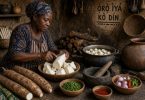
Tuwo shinkafa is a soft rice-based swallow traditionally served with soups. The National Institute for Cultural Orientation lists tuwo shinkafa and miyan kuka among foods associated with Northern Nigerian cuisine, including Kano.
Miyan kuka is prepared using powdered baobab leaves, while tuwo shinkafa is made by cooking rice until very soft and turning it into a smooth, cohesive swallow.
Tuwo Shinkafa Ingredients
For about 5–6 servings:
- 3 cups short-grain rice
- 6–7 cups water, approximately
- A small amount of salt, optional
Method
- Wash the rice thoroughly.
- Put the rice in a pot with enough water to cook it until extremely soft.
- Continue cooking until most of the grains lose their shape.
- Mash and turn the rice vigorously with a wooden spoon or suitable cooking utensil.
- Continue until the mixture becomes smooth and cohesive.
- Add a little hot water if necessary.
- Cover and allow it to steam briefly.
- Serve hot with miyan kuka, miyan taushe or another suitable soup.
The amount of water can vary depending on the rice, so add it gradually rather than pouring everything in at once.
Simple Miyan Kuka Ingredients
- ½ cup powdered baobab leaves (kuka)
- 500 g beef, goat meat or another preferred meat
- 1 onion
- 2 tablespoons ground pepper
- 2 tablespoons ground crayfish, optional
- ¼ cup palm oil
- 4 cups meat stock or water
- Salt to taste
- Seasoning to taste
Method
- Cook the meat with onion and salt until tender.
- Reserve the meat stock.
- Heat the palm oil gently in a pot.
- Add pepper and allow it to cook briefly.
- Add the meat stock and bring it to a simmer.
- Gradually sprinkle in the kuka powder while stirring.
- Add the cooked meat and seasoning.
- Simmer gently until the soup reaches the desired consistency.
- Taste and adjust the salt before serving.
Tip: Add kuka gradually. Adding too much at once can make the soup unnecessarily thick and difficult to mix.
Miyan Taushe: Another Sallah-Friendly Northern Soup
Miyan taushe is a pumpkin-based soup popular in Northern Nigerian cuisine. It can be served with tuwo and is particularly useful when you want a festive meal with a slightly different flavour from miyan kuka.
Basic Ingredients
- 500 g pumpkin or butternut squash
- 500 g beef or goat meat
- 1 onion
- 2 tablespoons ground pepper
- 2 tablespoons groundnut paste
- 2 tablespoons palm oil
- 2 tablespoons ground crayfish, optional
- 3 cups stock
- Salt to taste
- Seasoning to taste
Method
- Cook the meat with onion and salt until tender.
- Boil or steam the pumpkin until soft.
- Mash the pumpkin into a smooth or slightly textured paste.
- Add palm oil to a pot and gently cook the pepper.
- Add the stock and groundnut paste, stirring until combined.
- Add the mashed pumpkin.
- Add the cooked meat and crayfish.
- Simmer until the soup thickens.
- Taste and adjust the seasoning.
- Serve hot with tuwo shinkafa.
Dodo: The Easy Side Dish Everyone Recognises
Dodo is simply ripe plantain fried until golden brown. It is one of the easiest ways to add sweetness and colour to a festive Nigerian plate.
Ingredients
- 4 ripe plantains
- Vegetable oil for frying
- A small amount of salt, optional
Method
- Peel the plantains and slice them diagonally or into rounds.
- Heat enough oil for shallow frying.
- Fry the plantain in batches.
- Turn each piece once it becomes golden underneath.
- Remove and drain excess oil.
- Serve immediately with rice, chicken or other festive dishes.
Choose plantains with yellow skins and some dark patches for a sweeter, softer dodo.
How to Build a Christmas or Sallah Feast on a Budget
You do not need to prepare every dish listed here.
For a smaller Christmas gathering, a practical menu could be:
- Jollof rice
- Fried or grilled chicken
- Dodo
- Simple salad
- Moi moi
For Sallah, you could prepare:
- Tuwo shinkafa
- Miyan kuka or miyan taushe
- Cooked or grilled meat
- Jollof rice for visitors
- Dodo or another simple side
Cooking one main rice dish and one protein can significantly reduce the amount of work required.
For a larger gathering, prepare the stew or soup base, meat and vegetables ahead of time. On the celebration day, you can concentrate on cooking the rice, finishing the protein and assembling the table.
Common Mistakes to Avoid
Adding too much water to rice
Too much liquid can produce soft, sticky rice. Add stock gradually and consider the moisture already present in the tomato or pepper mixture.
Burning the bottom of the pot
Once rice starts cooking, reduce the heat. A heavy-bottomed pot can help distribute heat more evenly.
Overcrowding fried food
Frying too many pieces of chicken or plantain at once can reduce the oil temperature and lead to greasy food.
Making soup too thick
Soups such as miyan kuka can thicken as they stand. Keep some hot stock nearby so you can adjust the consistency before serving.
Preparing too much food
Festive cooking often encourages large portions, but cooking more than your guests can reasonably eat creates unnecessary waste. Estimate portions based on your guest count.
Storage and Reheating
Festive meals often produce leftovers, so safe storage matters.
Perishable cooked foods should be refrigerated or frozen promptly rather than left at room temperature for extended periods. The FDA recommends refrigerating or freezing prepared food and leftovers within two hours; in very hot conditions, the recommended limit is shorter.
Store rice, chicken, meat and soups in clean, covered containers. Divide very large quantities into smaller containers so they cool more efficiently.
For frozen leftovers, safe thawing methods include the refrigerator, cold water or microwave. USDA guidance says thawed leftovers should generally be used within 3–4 days when refrigerated.
Reheat only the amount you plan to eat, and make sure the food is heated thoroughly.
Frequently Asked Questions
What food is commonly eaten at Christmas in Nigeria?
Popular choices include jollof rice, fried rice, chicken, fried plantain, moi moi, salads, small chops and various meat dishes. Menus differ between families and regions.
What food is prepared during Sallah in Nigeria?
Sallah menus vary widely, but Northern Nigerian households may prepare tuwo shinkafa with soups such as miyan kuka or miyan taushe, alongside different preparations of meat. Rice dishes and meat are also common festive choices.
Can I prepare jollof rice ahead of time?
Yes. You can prepare it ahead and refrigerate it promptly in a covered container. When reheating, add a small amount of stock or water if necessary and heat thoroughly.
What can I serve with Nigerian jollof rice?
Jollof rice pairs well with fried or grilled chicken, beef, goat meat, fried plantain, moi moi and simple salad.
Which soup goes well with tuwo shinkafa?
Tuwo shinkafa can be served with several soups, including miyan kuka, miyan taushe, miyan kubewa and other regional Nigerian soups.
Can I make Sallah food without ram meat?
Yes. Beef, goat meat, chicken or other preferred proteins can be used. The choice depends on availability, family tradition and budget.
How do I stop fried rice from becoming soggy?
Cook the rice until just tender rather than overly soft, allow it to cool, and avoid adding excessive liquid during stir-frying.
How long can festive leftovers stay outside the refrigerator?
Perishable cooked food should not be left at room temperature for more than two hours under normal conditions. In temperatures above 32°C, FDA guidance recommends limiting this to one hour.
Conclusion
Christmas and Sallah meals are about much more than filling the stomach. They bring family members, friends, neighbours and visitors around the same table, while giving each household an opportunity to preserve its own food traditions.
From smoky Nigerian jollof rice and golden dodo to tuwo shinkafa with miyan kuka, there are plenty of ways to create a memorable festive meal without preparing an unnecessarily complicated menu.
The practical tip is to plan your quantities before you start cooking. Prepare the meat, soup bases and vegetables ahead where possible, then concentrate on finishing the fresh dishes close to serving time. Start with the dishes your family enjoys most, and build the rest of the menu around them.
Leave a Comment